
Jersey City Directory Holdings
The Jersey City Free Public Library Special Collections identifies the New Jersey Room as the main local shelf for historical directory research. It reports a complete published Jersey City and Hoboken run from 1849 through 1925. An established genealogy reference describes the detailed run as 1849 through 1910, followed by 1915, 1918, 1922, and 1925. Treat those descriptions as a reason to request the exact volume, not as proof that each year has the same index or format.
Start with the printed name and the year that matters. Then capture the directory title, page, address, and any notation exactly as shown. The next source can test a move, a spelling variant, or an old municipal name without turning a dated listing into a claim about the present.
| Collection | Years | Where Held | Access |
|---|---|---|---|
| Jersey City and Hoboken published city directories | 1849-1925 core run | JCFPL New Jersey Room | Reading-room collection |
| Detailed directory sequence documented by genealogy reference | 1849-1910; 1915, 1918, 1922, 1925 | JCFPL New Jersey Room | Confirm volume and index in person |
| Jersey Journal index | 1912-1954; 1969-present | JCFPL New Jersey Room | Index and newspaper research |
| New Jersey Historical Society directory holdings | Exact local volume varies | Books and microfilm at the historical society | Archive inquiry and on-site research |
Other Hudson County places appear only intermittently in the broader collection, with dates reported from 1884 to 1951. Record the community name printed on the title page. A Jersey City search can miss a useful entry when the volume groups places differently.
Note: The reported local run describes published holdings, so check the requested volume for omissions, publisher changes, and separate index sections.
Jersey City Directory Access
The New Jersey Room is on the third floor of the Priscilla Gardner Main Library and focuses on Jersey City and Hudson County. Its reported hours are Monday through Thursday, 9 a.m. to 8 p.m., and Friday and Saturday, 9 a.m. to 5 p.m. Call (201) 547-4503 or email newjerseyroom@jclibrary.org before a visit, especially when a particular year or format matters. Hours should be confirmed before travel.
Bring the smallest useful question: a surname as printed, an address, a year range, and any older place name. The Room holds directories alongside newspapers, photographs, maps, periodicals, manuscripts, vertical files, and Hudson County Historical Society material. It is also a FamilySearch Affiliate Library, so some restricted FamilySearch material may be available inside a branch with a free account. That setting does not mean every Jersey City record is online or viewable from home.
Reading Jersey City Directories
A historical entry is compact evidence, not a modern profile. Depending on the volume, it may put a name beside an occupation, house number, street, household role, business connection, or a notation such as “removed” or “widow.” Publisher conventions can change between volumes. Photograph or transcribe the abbreviation key before interpreting a short mark.
| Printed name | Retain initials, spelling, and the order shown in the volume. |
|---|---|
| Occupation or trade | A dated description that can point to a business or newspaper search. |
| House number and street | An address for that directory year, which may use an older street form. |
| Household role | A relationship, business, removal, or widow notation when the publisher included one. |
| Cross-reference | An address-order entry or index clue that should be checked against the direct listing. |
- Criss-cross directory
- An address-order section that can point from a street number to a listed name. Its coverage and abbreviations are specific to the volume.
- Householder index
- An index arranged around the household or address, useful for locating a direct entry but not a substitute for reading it.
- Abbreviation key
- The publisher’s explanation of shortened terms and symbols. Keep a copy with the entry before drawing conclusions.
Use the direct line and the reverse reference together when both exist. A reverse entry is a lead, while the direct entry shows the publisher’s fuller wording.
Jersey City Newspaper Trails
The New Jersey Room reports Jersey Journal indexes for 1912 through 1954 and 1969 to the present. Those indexes can lead to obituaries, civic activity, building references, and neighborhood events. Keep the newspaper title, issue date, page, and index reference with the directory citation. The index is the first stop, not the complete proof of what the printed page says.
The digitized Jersey City newspaper archive offers full-text search with advanced fields for country, state, city, title, and date range. Search a surname fragment, initials, an old street form, or a business name. Historic type and narrow columns can cause OCR errors, so inspect the page image and record the visible issue and page after a promising hit.
Note: A newspaper mention may support an event or address connection, but it does not establish continuous residence between the directory year and the issue date.
Jersey City Directory Place Names
Older records can use Bergen Township, Hudson City, Bergen City, or Jersey City for places that are now searched under one modern name. Historic-preservation material traces the consolidation of Hudson City, Bergen City, and Jersey City in 1869-70, with Greenville added in 1873. Search the place name that fits the date of the volume, then keep that original label in the citation.
Street forms deserve the same care. A printed abbreviation, former street name, or renumbered address should be stored as printed and normalized in a separate research note. That preserves the evidence trail and makes a later map or deed comparison clearer.
- 1849: the reported Jersey City and Hoboken directory run begins.
- 1869-70: consolidation changes the municipality labels a researcher may need to search.
- 1873: Greenville is added to Jersey City, creating another historical label for context.
- 1925: the reported core run ends, with the known gaps and publisher changes still needing volume-level review.
Note: A historical municipality label is a search term, not an error to silently replace with the modern city name.
Trace Jersey City Households
Follow a household one directory year at a time rather than guessing from a single listing. Pair selected directory years with the decennial census to bridge the long interval between census counts. A disappearance can reflect a move, death, a spelling change, a missed volume, a nearby address, or a new publisher. It is not proof of a departure on a particular day.
- Choose the exact municipality and year, then find the direct name entry.
- Copy the printed name, address, trade or role, volume title, and page.
- Check the next available directory year and note only the changes the entries show.
- Use a criss-cross or address-order section when the volume has one, then verify the result in the direct listing.
- Compare the directory dates with the matching census, newspaper index, map, or deed source according to the question.
For a present-day address question, a historical volume is only one layer. The Jersey City address directory follows the separate, modern by-street record trail.
Jersey City Directory Maps
Pair a directory address with a dated fire-insurance map when the question concerns a building or block. The Library of Congress describes Sanborn maps as records of physical features such as structure size, construction, firewalls, openings, use, water mains, fire boxes, and hydrants. They do not provide an occupant list. Jersey City and Hudson examples include 1896 and volumes from 1912 through June 1950, plus a Black Tom sheet from 1916.
The Library of Congress Sanborn collection gives the map context; the New Jersey Room also points researchers to historic map resources. Capture volume, sheet, year, address or block, and the map key. Some 1923-1930 sheets carry restrictions or are not online, making a library or archive check important.
A New Jersey State Archives genealogy collection search is another route for collection-specific databases, microfilm, and paper holdings.
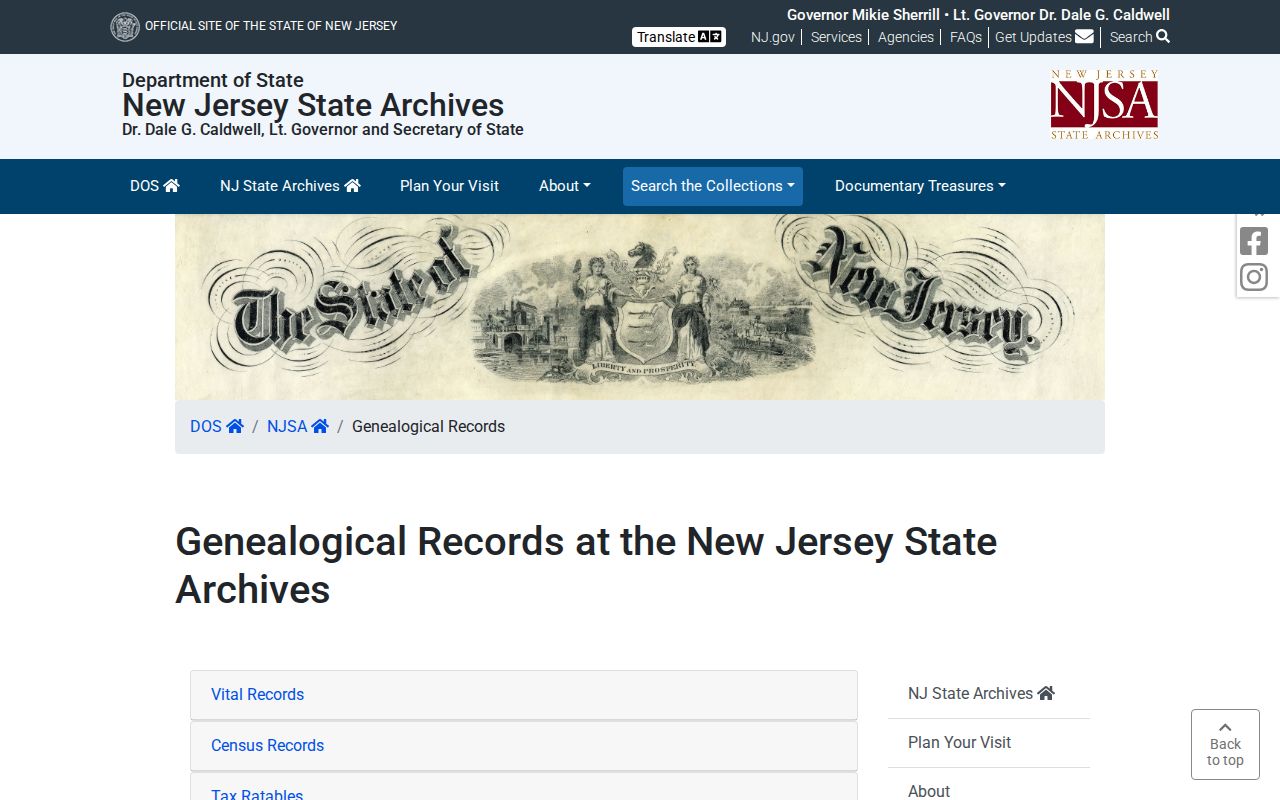
Archives coverage and access vary by collection, so use the repository’s description to confirm the date range and whether a research-room, mail, or online route applies.
Jersey City Archive Alternatives
The New Jersey Historical Society archive supplements the local library with city-directory, church, Bible, estate, and manuscript collections. Its larger directory holdings may be in books or microfilm, and the exact Jersey City volume can vary. Search the archive description or ask about the catalog title and format before making a trip.
This historical-society route is useful when the New Jersey Room year is absent or when a directory entry needs nearby context from a manuscript or church collection. State Archives research can also involve mail service, while the New Jersey Room offers an email and phone channel for a focused local-history question. Archive access is collection-based, not a single universal name search.
The historical society’s archive route shows the established collection channel for books, microfilm, and manuscript research.
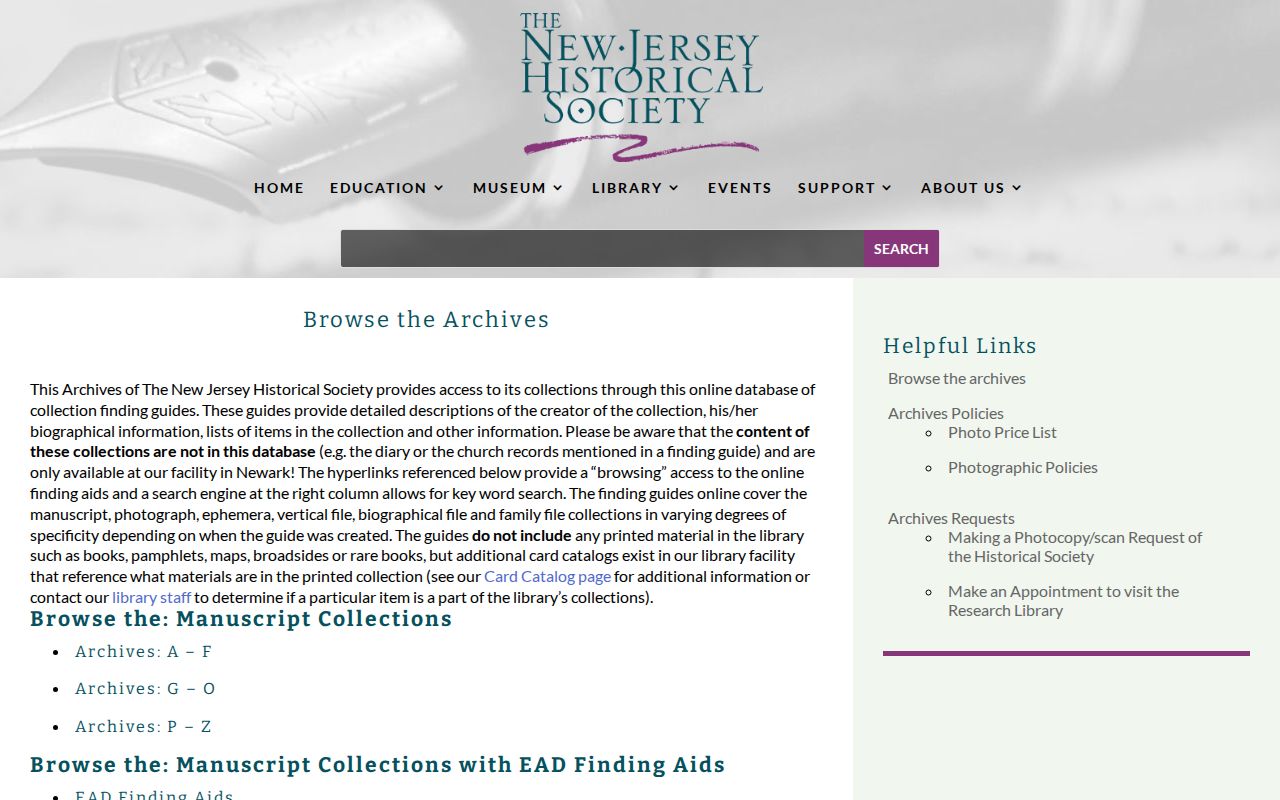
Use the image, catalog description, and the physical item together. A repository listing identifies a collection; the cited volume or microfilm frame supplies the evidence for a particular entry.
Note: Archive catalog results identify potential material, while the cited item and its original wording support a dated historical claim.
Jersey City Directory Limits
A Jersey City city directory documents what its publisher printed for a stated period. It does not establish current occupancy, legal title, or the exact date someone arrived or left. A directory’s first listing differs from a construction date, a deed recording date, a permit filing, and a newspaper mention. Label each date by the event that source actually records.
When an important fact rests on a historic entry, retain the scan or volume reference and seek confirmation from the responsible archive, library, or records custodian. That preserves the difference between a useful historical lead and a verified record.